Get It Right the First Time: A How-To Guide for Matching Power Outlets & Plugs
Posted on August 29, 2016 By Alison P
Understanding 110 Volts vs. 220 Volts: Key Differences in Power Supply
These are the 2 distinct types of power sources you will find in your home. The important difference is the amount of potential energy, or voltage, the socket is able to supply to the device plugged into it.
The most common electrical outlet in any home is a 110 volt. Sometimes you may hear 110 volt plugs referred to as 120 volt. Do not be confused by this; think of them as one and the same.
There are a few variations of the 110 volt outlet based on the size of the breaker associated with the circuit, which is measured in Amps. The 2 most common variations are 15 Amp and 20 Amp.
110 Volt 15 Amp - Standard Outlets for Everyday Use
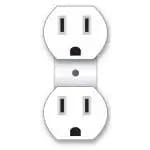
The most basic is the 110 volt 15 amp outlet. This is suitable for the majority of your electronic needs, such as TVs, microwaves, and small air conditioners.
110 Volt 20 Amp - For Appliances That Need More Power
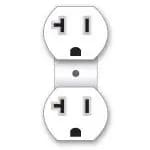
A horizontal pin is an obvious indicator that this type of outlet is required. You can plug in a smaller device that does not need 20 amps because it still offers the 2 vertical inputs. If your appliance strictly needs 20 amps to power it, the horizontal pin will prevent you from plugging it into an incompatible 15 Amp socket. Small dryers and washers often use this socket.
With the increased electrical demands of larger appliances, such as electric ranges, the power supply is doubled by combining 2 circuits and creating a 220 volt outlet. Simply stated, this supplies more power. Just like with 110 volt, 220 volt devices may alternatively be referred to as 230 or 240 volt.
Like the 110 volt outlet, there are a few variations of the 220 volt outlet based on the size of the breaker and measured in Amps. However, in this case there are 3 common variations: 15 Amp, 20 Amp and 30 Amp.
Like the 110 volt outlet, there are a few variations of the 220 volt outlet based on the size of the breaker and measured in Amps. However, in this case there are 3 common variations: 15 Amp, 20 Amp and 30 Amp.
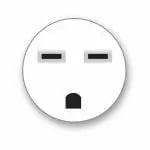
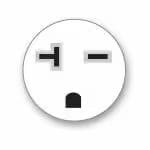
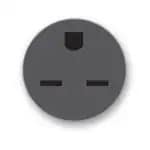
As you can see, each of the various outlet types has a distinctly different look that needs to match the plug on your new appliances or electronics. It's designed this way to make it extremely difficult to use an outlet that is incompatible with your appliance. To be sure you get it right, check your existing outlets before you make a new purchase. Take a photo of the outlet you intend to use and then refer to it as you shop!


