How Big Should Your TV Be for Watching Sports?
Posted on May 03, 2026 By Mike M.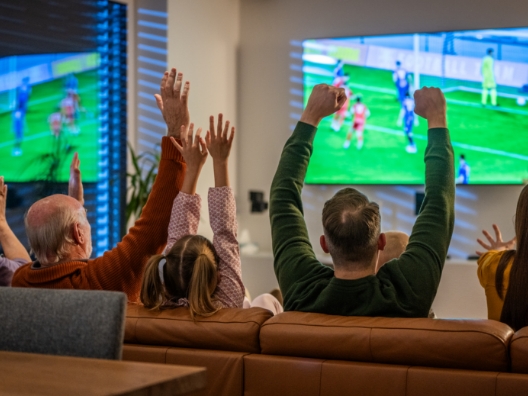
Finding the right TV size for watching sports isn't just about buying the biggest screen you can fit through your front door. Because sports involve fast-moving objects like soccer balls and hockey pucks, the relationship between your screen size and your seating distance is the difference between feeling like you're at the stadium or feeling like you're squinting from the parking lot. Whether you're prepping for a summer of soccer or just want a better view for your Sunday afternoon games, picking the right dimensions is the first step to an immersive experience.
Read on to learn:
- How to choose a TV size based on your specific viewing environment.
- How your room layout dictates your seating distance.
- Tips for ensuring every guest has a "front-row" view.
Best TV Size for Watching Sports
There is no "one size fits all" for watching sports; the best screen for you depends on your room size and your average number of viewers. If you primarily watch games alone, a massive screen might feel overwhelming in a small room, but if you're the go-to house for every major tournament, a smaller screen will leave your guests frustrated. You'll want to consider the room's lighting, the number of viewers, and the primary purpose of the space before settling on a number. A good metric for television sizing is ten inches of screen for every foot of viewing distance. For example, if you'll be sitting five feet away from your TV, a 50" TV screen is roughly where you'd like to be; go much smaller, and you won't get the best viewing experience. Measure the distance between your television's future home and the spot from which it'll be viewed most often, and use that to determine the TV's optimal size.
Bedroom
Watching a match from the comfort of your bed is a different experience than sitting on a sofa. Because you are usually closer to the screen, and often lying down, you don't need a massive display to feel immersed.
- Size Range: A 43-inch to 55-inch TV is typically the "sweet spot" for a bedroom.
- Visibility: These sizes are large enough to clearly see scrolling score tickers, but small enough to fit on a dresser or a slim wall mount. You can also always go smaller if you need to.
Living Room
The living room is the heart of the game-day experience. If you prefer a larger screen for solo viewing or you frequently have friends over, you're going to want a display that can handle that.
- Size Range: TVs in the 65-inch to 85-inch range are typically ideal for living rooms. This ensures that even guests sitting 10 or 12 feet away have a great view of the field.
- Room Layout: That size will change depending on your room's specific dimensions. If your sofa is far from the wall, you'll need those extra inches to maintain clarity. If you have a smaller living room, the TV will have to be a bit smaller to compensate.
- Mounting: A TV wall mount, particularly a full motion model, might help you and your guests see more of the action. One of these mounts will let you angle the TV toward different seating areas, ensuring no one is stuck with a side-view during a crucial play.
Outdoor Patio
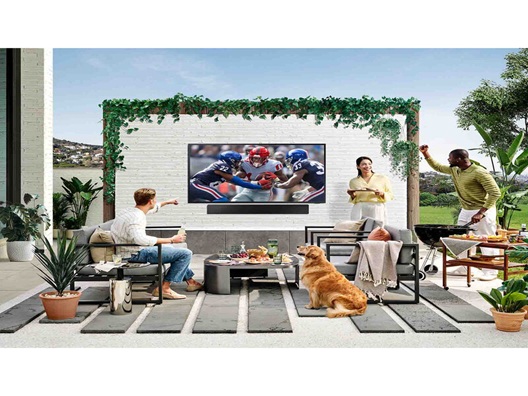
With the major soccer tournament happening over the summer, catching a few games outside is a great way to enjoy the weather.
- Size Range: Ideally, you'll want a decently large outdoor TV, perhaps 55 to 75 inches, to compete with the open space of a backyard.
- Sunlight and Space: Because you are outdoors, you often have more room to spread out, meaning people might be sitting farther away than they would indoors. A larger screen helps punch through the natural light and keeps the action visible even from across the deck.
- A projector may also be a good investment for an outdoor viewing party.
How Far Should I Sit from My TV?
Your seating distance is just as important as the TV size itself. If you sit too close to a massive TV, the motion might make you feel dizzy; sit too far, and you'll miss the high-definition details you paid for.
- Distance: You want to sit far enough from your TV that the screen fills up 30-40° of your field of view. At this distance you'll be immersed in all the action without feeling it's too close for comfort or straining your eyes. For a 65-inch TV, the ideal distance is about 8 to 10 feet.
- Perspective: If your couch is fixed at 15 feet away and you can't comfortably move it, you should lean toward a larger 75 or 85-inch model to fill your field of vision properly, or you can get a TV mount to help adjust the angle.
To learn more about setting up the best viewing angles when working with a mount, check out our blog: TV Mounting Tips for Better Viewing Angles.
FAQs
Does the TV height matter for sports? Yes. For the best experience, the middle of the screen should be at eye level when you are seated. If you mount it too high - like above a fireplace - you might experience neck strain during a long 90-minute match. A TV mount can help alleviate this issue.
Is a bigger TV always better for sports? Not necessarily. While a larger screen is more immersive, it can also make low-quality broadcasts look worse. However, because most modern sports are broadcast in high definition or 4K, a larger screen usually helps you appreciate the fine details, like the texture of the turf or the players' expressions.
Choosing the right TV size is all about balancing your room's layout with your hosting goals. Whether it's a compact screen for the bedroom or a massive 85-inch display for the ultimate living room watch party, getting the scale right ensures you never miss a moment of the action. Once you've found that perfect size, the only thing left to do is grab some snacks and wait for the opening whistle.