How to Load a Dishwasher
Posted on November 10, 2026
by Michael M.
Loading a dishwasher seems like one of those household tasks everyone just figures out on their own…until you open the dishwasher door to find cloudy glasses, crusty cheese on your favorite casserole dish, or a measuring cup full of dirty water. The truth is, there is a science to arranging your dishes. Knowing how to properly load a dishwasher saves you from re-washing plates by hand, protects your cookware, and keeps your machine running efficiently for years. Whether you’re settling a household debate over utensil placement or simply want to learn how to use a dishwasher to its full potential, mastering a few basic loading rules makes all the difference. So, how do you load a dishwasher? Read on to find out!
Here is a quick summary of what it takes to master loading a dishwasher correctly:
- Scraping large food scraps instead of rinsing dishes completely to save water and optimize detergent performance.
- Arranging glasses, cups, small bowls, and dishwasher-safe plastics face down toward the spray arm.
- Loading large plates, baking sheets, and heavy pots inward toward the primary water jets.
- Alternating cutlery orientation to prevent nesting and ensure even water coverage.
- Avoiding spray-arm obstructions, blocking detergent dispensers, and overloading.
How Do You Prepare Dishes Before Loading Them into the Dishwasher?
You prepare dishes for the dishwasher by scraping off solid food debris while skipping the pre-dishwasher sink wash. Modern dishwasher detergents rely on food enzymes to break down grime, meaning a light layer of food debris actually helps your detergent stick and perform better.
Essential Steps for Pre-Load Prep
- Scrape, Do Not Rinse: Use a spatula or fork to scrape large scraps directly into the trash or compost bin. Many modern dishwasher detergents rely on a layer of food to attach to, so there is no need to rinse them thoroughly.
- Let the Sensors Work: Rinsing dishes completely clean tricks your dishwasher's auto-sensors into thinking the load is already clean, which results in a shorter, less thorough wash cycle.
- Soak Baked-On Messes: There’s an exception to every rule! For heavy casserole dishes with burnt-on grime, a quick 10-minute soak in hot water helps loosen stubborn spots before placing them inside the machine. Though it’s not necessary to rinse regular dishes, heavily-soiled dishes and pans do need the extra cleaning.
What Belongs on the Top Rack of Your Dishwasher?
The top rack of your dishwasher is designed for glasses, mugs, small bowls, stemware, and dishwasher-safe plastics. Because the heating element resides at the bottom of the tub, keeping delicate items and plastic containers on the upper level prevents melting and warping.
Top Rack Loading Strategy
- Angle Glasses and Mugs: Place cups and glasses between tines at a slight angle so water drains off concave bottoms rather than pooling on top.
- Face Bowls Downward: Tilt cereal and soup bowls face-down and toward the center spray arm for direct water exposure.
- Secure Plastics: Make sure plastic containers and lids are tucked securely between tines so they do not flip over and fill with dirty water during the cycle.
What Is the Proper Way to Load the Bottom Rack?
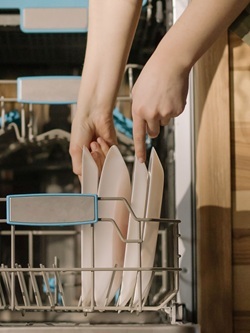
The proper way to load the bottom rack is to place heavy pots, pans, mixing bowls, and dinner plates in such a way that they face towards the center spray arm. Position your largest plates toward the sides or back so they do not block the water spray or prevent the detergent door from popping open.
Bottom Rack Placement Rules
- Face Plates Inward: Line up dinner and salad plates with their eating surfaces facing the center of the rack where the water spray usually comes.
- Place Pots and Pans on the Sides: Position large baking sheets and frying pans along the outer edges or back row so they do not block water flow to the rest of the tub.
- Check the Spray Arm Clearance: Give the middle and bottom spray arms a manual spin before closing the door to ensure tall platters or cutting boards are not obstructing their rotation.
How Should You Load Cutlery in the Silverware Basket?
You should load cutlery into the basket by mixing spoon, fork, and butter knife placements while keeping sharp chef knives out entirely. Alternating handle directions prevents spoons and forks from nesting together, ensuring water reaches every surface.
Cutlery Basket Best Practices
- Mix Up the Handles: Place some spoon and fork handles facing up and others facing down so the heads do not nest together.
- Place Knives Point-Down: For safety, load butter knives and small butter spreaders with handles facing up and points facing down.
- Hand Wash Premium Cutlery: Keep high-carbon chef knives and wooden-handled utensils out of the machine, as high heat and harsh detergents can dull blades and damage natural materials.
What Are the Most Common Mistakes to Avoid When Loading a Dishwasher?
The most common mistakes when loading a dishwasher include overcrowding dishes, blocking spray arms, and nesting bowls too tightly together. Knowing to avoid these common pitfalls ensures that you’ll load a dishwasher correctly every time.
Pro Tips for Better Wash Performance
- Avoid Nesting Items: Do not overlap plates or nest small bowls inside larger ones. If water cannot reach a surface, it cannot clean it.
- Unload Bottom to Top: Always unload the bottom rack first when the cycle finishes. This prevents any water collected on concave top-rack items from dripping onto dry plates below.
- Clean the Filter Regularly: Twist out the bottom manual filter every few weeks and rinse it under warm water to remove trapped food particles and prevent unpleasant odors.
Mastering the proper way to load a dishwasher takes standard kitchen cleanup from a multi-step chore to a one-step system. By angling your glasses, placing heavy cookware on the bottom, and giving your silverware room to breathe, you maximize your machine's cleaning power while saving time and water. Once you get the routine down, you can press “Start” with complete confidence, knowing every plate, glass, and fork will come out spotless and ready for your next meal!