The Best Gaming TV Features of 2026
Posted on July 05, 2026 By Mike M.
A TV is for more than just passive watching! When gaming is the main event in your living room, you want a screen that can keep up with the lightning-fast processing of modern video game consoles and PC rigs. Television engineering has moved incredibly fast over the last few years, meaning the ideal setup requires a mix of high-speed ports, responsive refresh rates, and smart features.
In this guide, we will break down the essential gaming TV specs:
- Why 4K combined with advanced Dolby Vision transforms your virtual worlds.
- Comparing the perfect blacks of OLED and QD-OLED to the brightness of Mini-LED and QLED.
- How modern HDMI ports, ALLM, VRR, and eARC deliver a seamless, tear-free immersive gaming session.
Which Basic Features Matter on a Gaming TV?
Resolution
A TV's resolution refers to the total number of pixels on the screen; the greater the pixel density, the sharper your game will look. While 1080p used to be the norm, 4K TVs tend to be the baseline standard for modern gaming. Operating at 3840 x 2160 pixels, 4K delivers four times the detail of full HD, ensuring that small text and distant open-world landscapes remain perfectly crisp.
HDR (High Dynamic Range)
While resolution dictates the sharpness of the image, HDR controls the depth of the colors and contrast. A premium TV with advanced HDR capabilities ensures that piercing sunlight looks brilliantly bright, while shadowy corridors retain ink-like black levels without completely enshrouding hidden enemies.
- Look for Dolby Vision Gaming: For maximum visual fidelity, look for a display with Dolby Vision or HDR10+ compatibility.
- Console Synergy: Modern systems like the Xbox Series X and PS5 Pro leverage these advanced tone-mapping formats to make your games look like a living cinematographic masterpiece.
Screen Type
Choosing your TV type is all about matching your room's lighting to your favorite gaming genres. The display market has evolved into a battle between self-emissive perfection and high-density backlighting power.
- OLED TVs: These TVs feature millions of self-lit pixels that can be switched completely off. This produces an infinite contrast ratio and true, perfect blacks. OLED TVs also offer near-instantaneous response times and flawless viewing angles, making them the gold standard for competitive, fast-paced FPS games.
- Mini-LED TVs: If you game in a sun-drenched living room, a Mini-LED display is an incredible choice. By placing thousands of microscopic LEDs behind a quantum dot layer, these TVs hit staggering peak brightness levels and minimize room glare, all while using advanced local dimming zones to keep contrast incredibly rich.
- Micro RGB TVs: Though they're relatively new to the TV game, micro RGB TVs are also great for gaming. They offer incredible brightness levels and an impressive color palette, helping immerse you further into your favorite story games. You can learn more by reading our “What is an RGB Mini-LED TV?” blog article.
Screen Size
When selecting your screen size, bigger is generally more immersive, but you want to match the display to your seating arrangement. A good metric is to add ten inches to the minimum screen size for every foot of distance between the screen and your seat. For example, if you're going to be sitting six feet away from your TV, don't go any smaller than a 60" screen.
What Are Key Gaming-Specific Features?
Many modern TVs come with a variety of gaming-specific features that serve to massively improve your gaming experience.
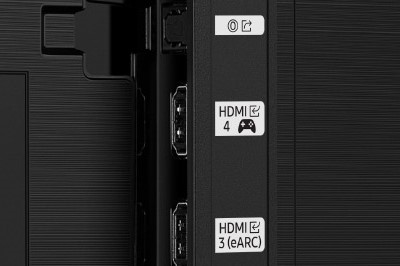
- HDMI 2.1: Many TVs come with HDMI 2.1 ports. A standard HDMI cable and port simply don't have the data pipeline required to pass high-resolution, high-frame-rate signals. Ensure you are using an Ultra High Speed HDMI 2.1 certified cable to upgrade your bandwidth up to a massive 48Gbps. This extra speed allows you to play games at higher resolutions, with better colors and more frames per second.
- Variable Refresh Rate (VRR): Unlike movies, a video game's frame rate can fluctuate frequently based on the amount of action happening onscreen. VRR syncs your TV's refresh rate dynamically with your console's output, ensuring that everything will look smooth onscreen no matter what's happening.
- Auto Low Latency Mode (ALLM): There is nothing worse than hitting a button on your controller and experiencing a split-second delay before your character reacts. This is called input lag, and it could be the difference between winning and losing a match. ALLM instantly detects when a gaming console is powered on and automatically switches the TV into its dedicated "Game Mode," dropping input lag down to imperceptible milliseconds.
- eARC (Enhanced Audio Return Channel): eARC stands for Enhanced Audio Return Channel, and when connected to a soundbar or receiver it's able to support up to eight channels of uncompressed audio in formats like DTS and Dolby Atmos. Instead of compressing the audio into a smaller bandwidth, eARC surrounds you with a full spectrum of auditory detail.
Upgrading your setup with a feature-packed gaming TV completely changes how you experience your favorite titles. By prioritizing gaming-centric features, you gain a distinct competitive edge while enjoying breathtaking cinematic visuals. Ready to build the ultimate gaming sanctuary? Explore the latest and greatest in TV technology and get your game on!