How to Choose a Pillow That's Personally Fit to You
Posted on November 18, 2026
by BEDGEAR
Most people choose a pillow the same way: You walk into a store, squeeze a few in the aisle, pick the one that feels nice, and then hope for the best. Later that night, you wake up with a stiff, sweaty neck and your arm jammed under your head. Does that nightmare sound familiar to you? If so, you’ve come to the right place, because we’re going to help you find the best pillow fit!
A pillow’s job is to hold your head and neck in line with your spine all night, and the right height and feel to do that depends on you: your sleep position, your body frame, your mattress, and how warm you sleep at night. In fact, two people who both sleep on their side can need completely different pillows. That's why BEDGEAR makes pillows that are personally fit to you.
Read on to learn how to choose a pillow that fits you, step-by-step.
How to Choose a Pillow: The Quick Answer
- Start with your sleep position: Side sleepers need the most height, back sleepers need medium height, and stomach sleepers need the least.
- Factor in your body frame: Broader shoulders mean a bigger gap between your head and the mattress, so you need more height.
- Account for your mattress: A softer mattress lets your shoulder sink in, so you may need a lower pillow than you would on a firmer bed.
- Pick a feel and fill: Choose between conforming fills like memory foam, and responsive fills like latex or performance fibers.
- Choose for temperature: If you sleep hot, look for breathable covers, airflow panels, and cooling fabrics.
Why "One-Size-Fits-All" Never Works for Pillows
You wouldn't buy a pair of running shoes without knowing your size, and you'd pick a different shoe for trail running than for the track, right? At the end of the night, pillows work the same way, and you can feel the difference. For example, when your pillow is too high, your head tilts up and strains your neck. When it's too low, your head drops and your shoulder takes on the pressure instead. Either way, you toss and turn trying to get comfortable, and that cuts into the deep, restorative sleep your body needs to recover. The good news is that a pillow that's fit to your body keeps everything in line, so you can settle in and stay asleep.
How to Choose a Pillow That’s Personally Fit to You
Learning how to choose a pillow that fits how you sleep has never been easier. To make the process hassle-free, we bring you through five simple steps to follow.
Step 1: Start with Your Sleep Position
First and foremost, your sleep position decides how much space your pillow needs to fill. Think about how the position you’re in when you fall asleep, and the one you’re in when you wake up. That's usually your dominant sleep position, even if you’re someone who tosses and turns at night. We dive a little deeper into what this looks like for every sleep position below.
Side Sleepers
Side sleepers have the biggest gap to fill: the distance between your ear and the outside of your shoulder. You'll want a higher, more supportive pillow that keeps your head level with your spine instead of tilting toward the mattress. A pillow between your knees can help keep your hips aligned too.
Back Sleepers
Back sleepers need medium height. This is because the goal is to support the natural curve of your neck and keep your head neutral, without pushing your chin toward your chest. If your pillow props your head forward, though, it's too high.
Stomach Sleepers
Stomach sleepers need the lowest, softest pillow, or sometimes no pillow at all (if you can believe that)! A thick pillow forces your neck to bend backward for hours, so look for an ultra-low option that barely lifts your head.
Combination Sleepers
If you switch positions through the night, choose a medium height with a responsive fill that bounces back quickly as you move. When in doubt, choose a pillow size for the position you spend the most time in.
Step 2: Match the Right Pillow Height to Your Body Frame
Pillow height, also called pillow loft, is where most people go wrong. Your sleep position gives you a starting point, but your body frame fine-tunes it. For example, someone with broad shoulders who sleeps on their side needs more height than a smaller-framed side sleeper, because there's more space between their head and the mattress.
Pillow height is measured in inches of loft, from the surface the pillow rests on to its highest point. In the table below, we offer a general guide:
| Pillow Classification | Approx. Loft | Usually Fits |
|---|---|---|
| 0.0/Low | Under 3 in. | Stomach sleepers and anyone who wants minimal lift |
| 1.0/Low to Medium | 3 to 4 in. | Back sleepers and smaller frames |
| 2.0/Medium | 4 to 5 in. | Most back and combination sleepers |
| 3.0/High | 5 to 7 in. | Side sleepers and broader shoulders |
Treat these ranges as a starting point, not a prescription. A back sleeper with broad shoulders might need a taller pillow, and a petite side sleeper might be more comfortable in the medium ranges.
Step 3: Don't Forget Your Mattress
Your pillow and mattress work as a team. On a softer mattress, your shoulder and hips sink in further, which lowers your body and shrinks the gap your pillow needs to fill. On a firmer mattress, you sit higher on the surface, so you may need a taller pillow to stay aligned. Even if you have the best pillow in the world, the wrong mattress can work against you.
Not sure where your bed falls? P.C. Richard & Son has a helpful mattress firmness guide, or take a deeper dive with their mattress buying guide. If you're shopping for a new mattress at the same time, choose the mattress first, then fit your pillow to it.
Last but not least, if you’re sleeping on an adjustable bed frame, you may need some adjustments. After all, raising the head of the bed changes your angle, so many people find they want a slightly lower pillow when they sleep elevated. For more information, here's a great blog article detailing what an adjustable base actually changes about the way you sleep.
Step 4: Pick a Feel: Types of Pillows and Pillow Materials
Once you know your height, choose how you want the pillow to feel. Some fills conform and cradle your head, whereas others are responsive and push back with more lift. In the table below, we cover the common types of pillows and who they suit.
| Fill | How it Feels | Good to Know |
|---|---|---|
| Memory Foam | Conforming and slow-moving; cradles your head | Holds its shape well. Traditional foam can trap heat, so look for a breathable cover. |
| Latex | Springy and responsive | Bounces back quickly, which helps combination sleepers. Not for anyone with a latex allergy. |
| Down and Feathers | Soft, squishy and moldable | Compresses through the night and needs regular fluffing |
| Down Alternative | Soft and lightweight | Often easy to wash, but can flatten faster than other fills |
| Performance Fiber and Hybrid | Balanced support that adapts as you move | Combines fills and breathable materials to pair support with airflow |
What does this mean for the firm vs. soft debate? Well, a firmer, more elevating feel suits side sleepers who need their pillow to hold its height. A softer, more conforming feel suits stomach sleepers and anyone who likes to sink in. Back sleepers usually land somewhere in between.
Step 5: Considerations for Hot Sleepers
If you flip your pillow looking for the cool side all night, temperature belongs on your checklist! Heat and moisture build up where your head rests, and that discomfort can wake you up. For hot sleepers, especially during those humid New York summers, look for:
- Breathable, moisture-wicking covers: These materials move heat and sweat away from your skin to cool you down, and BEDGEAR specializes in moisture wicking.
- Airflow panels and vents: Consider pillows with gussets that let air move through the pillow instead of trapping it.
- Cool-to-the-touch fabrics: Fabrics that feel cool the moment you lie down
- Removable, washable covers: This way, your pillow stays fresh between washes.
At the end of the night, your bedding plays a part too. Breathable sheets and pillowcases and a mattress and pillow protector that doesn't trap heat can help your whole bed stay cooler.
Find a Pillow That's Personally Fit to You
Many performance pillows now come in multiple heights, so you can match the pillow to your body instead of bending your body to fit the pillow. BEDGEAR is a leader in the performance pillow space! BEDGEAR pillows at P.C. Richard & Son work this way: Choose a height for your body frame and sleep position, then choose the series that matches how warm you sleep.
Here are three picks for BEDGEAR pillows that can fit your sleep style:
- Balance Performance Pillow: A breathable all-rounder with Air-X® mesh and a Dri-Tec® moisture-wicking cover; available in four heights and a budget-friendly price.
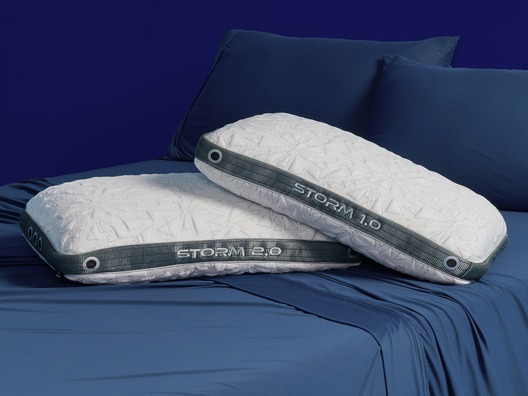
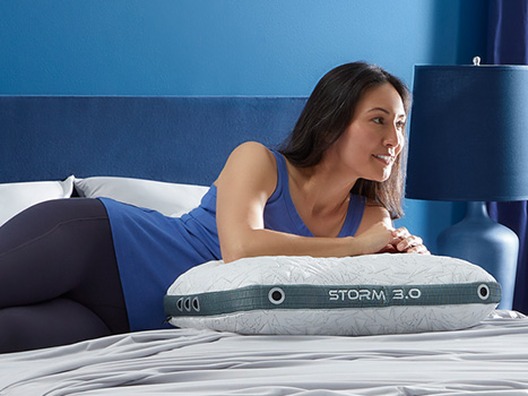
- Storm Performance Pillow: Made for warm sleepers, with an instant-cooling Ver-Tex® cover, Air-X® mesh and air vents; also comes in curved designs for side sleepers.
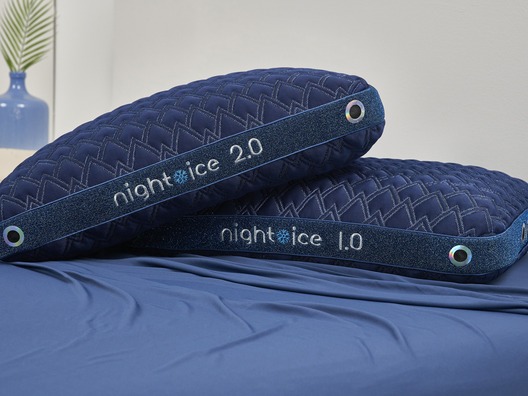
- Night Ice Performance Pillow: One of the coolest pillows on the market. Night Ice layers advanced cooling materials with enhanced airflow, so heat doesn't build up where your head rests.
You can simply browse all BEDGEAR pillows at P.C. Richard & Son and find cooling and side sleeper pillows that are personally fit to you.
How to Test a Pillow Before You Commit
Before you purchase a pillow, it’s a good idea to know exactly what you need. Here’s how to test a pillow before you commit:
- Lie down in your real sleep position. Don't just squeeze the pillow; lie on it the way you sleep.
- Check your alignment. On your side, your nose should line up with the center of your chest and your head shouldn't tilt up or down. On your back, your chin shouldn't push toward your chest.
- Notice your shoulder. If it feels jammed or you want to slide your arm under the pillow, you probably need more pillow loft.
- Give it time. A new pillow can feel strange at first, so give your body a week or two to adjust to your new pillow.
Do you want a hand? Visit a P.C. Richard & Son showroom to try pillows in person, or call a specialist at 1-877-727-1909.
Signs Your Current Pillow Isn't the Right Fit
Are you unsure about your current pillow? If you need confirmation, look out for some of these signs:
- You wake up with a stiff neck or sore shoulders
- You sleep with your arm under your pillow, or fold your pillow in half for more height
- You flip the pillow all night looking for a cool spot
- It stays flat after fluffing or keeps lumps after washing
If any of this sounds familiar, it may be time for a new pillow sooner rather than later. You can also learn more about when to replace your pillow if you’ve been sleeping on the same one for a long time.
Frequently Asked Questions About Choosing a Pillow
Do you have more questions about finding a pillow that’s personally fit to you? If so, here are the three most common questions we hear:
What type of pillow is best?
There isn't one best type of pillow for everyone. The best pillow is the one that's personally fit for you, keeping your head and neck aligned in your sleep position. Start with the right height for your position and body frame, then choose a fill and cooling features based on how you like to feel.
What is the correct pillow height?
The correct pillow height keeps your head level with your spine. As a general guide, stomach sleepers do best under about three inches of loft, back sleepers around three to five inches, and side sleepers around five inches or more. Broader shoulders and firmer mattresses both call for a little more height.
Should side sleepers use a firm pillow?
Most side sleepers do best with a higher, firmer pillow that holds its shape through the night and fills the space between the head and shoulder. A pillow between your knees can help too.
Our Final Thoughts on How to Choose a Pillow That’s Personally Fit to You
At the end of the night, the right pillow isn't the softest one on the shelf or the one with the highest star rating. Instead, it's the pillow built for your body, your bedding, and of course the way you sleep.
The good news is that when your pillow is personally fit to you, you spend less time adjusting and more time recovering. This helps you wake up ready for whatever's next. When it comes to the best pillows that are personally fit to you, BEDGEAR is always a great choice.
Ready to find your fit? Visit a P.C. Richard & Son showroom to try pillows in person, or shop for pillows online.